
 Events, workshops, & labs join the
The best AI projects to outsource are specific, measurable, and technically complex. Good examples include data preparation, machine learning model development, LLM integration, AI chatbots, recommendation systems, fraud detection, demand forecasting, computer vision features, AI-powered customer support, and MLOps setup.

June 3, 2026
Reading time: 7 min
June 3, 2026
Reading time: 7 min
Let’s start with the Top 10 Reasons to Outsource Your AI Project. Sounds like a catchy headline, right? Lower costs, faster delivery, access to experts, flexible teams, better scalability, and so on.
And yes, most of these points are true.
But that is not the article you need. The real question is not whether AI outsourcing is good or bad. The real one is: "What parts of your AI project should you actually outsource?"
An average AI development project takes 8-10 months from kickoff to delivery. Recruiting alone can take 6 months, if you need skilled AI engineers at limited budget. Then comes onboarding, architecture planning, data access, infrastructure setup, testing, and the first real experiments. Yes, you can build it yourself. Probably. If you have enough time and money.
But should you? That's the better question.
According to Deloitte's Global Outsourcing Survey, 92% of the world's 2000 largest companies use outsourcing services to achieve innovative goals. They're not doing it because they can't afford internal teams. They're doing it because it's strategically smarter.
Here's when I recommend:
Don’t outsource AI. Outsource the parts that slow you down.
You should not hand over your product vision or your business logic. And definitely you should not let an external team decide what your company should become.
But you can outsource the technical heavy lifting. Data preparation. Model development. LLM integration. MLOps setup. Testing. Deployment support. Monitoring. AI feature development.
In other words, outsource execution.
5 Cases Where Outsourcing AI Development Makes Sense
You Need to Move Faster Than Hiring Allows
Your competitor has just launched a new AI-powered feature. Your biggest client is evaluating solutions next quarter. You promised a working demo at a conference, and the event is only eight weeks away.
This is where internal hiring becomes too slow. Even if you find strong AI specialists quickly, you still need time for interviews, offers, onboarding, architecture decisions, data access, infrastructure setup, and the first technical experiments.
An outsourced AI team already has delivery patterns, reusable components, data pipelines, evaluation workflows, and deployment experience. So, you are not starting from scratch.
You are starting with a team that has already solved similar problems before. That matters when the market window is open now, not next year.
By the way, the IT outsourcing market is projected to reach over $800 billion by 2029, growing at a CAGR of 5.48%. You're not locked into a fixed capacity. You scale with demand, not with recruitment cycles.
The Project Has Clear Boundaries
AI outsourcing works best when the project has a clear problem, clear inputs, clear outputs, and measurable success criteria.
For example:
- a recommendation engine for an e-commerce platform;
- a document classification system for internal operations;
- a chatbot for customer support;
- AI-powered search across company knowledge bases;
- fraud detection logic;
- demand forecasting;
- automated QA or test generation;
- AI workflow automation for repetitive business processes.
These projects are specific enough to scope, build, test, and improve.
What does not work well? А vague ambition like “we need to use AI somehow.” That is not a project. That is a leadership workshop.
Before you outsource, you need to know what business problem you are solving. Not necessarily the final technical solution, but the business pain should be clear.
You Need Specialized Expertise Temporarily
You may need computer vision expertise for one feature. NLP specialists for another. MLOps support during deployment. Data engineers to clean and structure your data before model training.
Hiring permanent experts for every temporary need is expensive and often unnecessary.
Outsourcing gives you access to specialist knowledge only when you need it.
This is especially useful for companies that already have a strong internal engineering team but do not have deep AI delivery experience. Your team can stay focused on the product, while external specialists handle the AI-heavy parts.
Your Internal Team Is Already Overloaded
Some AI projects fail before they start because the internal team is already busy.
They are maintaining the core product. Fixing bugs. Supporting clients. Updating infrastructure. Managing technical debt. Delivering the roadmap.
Then leadership adds an AI initiative on top.
At first, everyone is excited. Then the deadlines start to slip. The AI project moves slowly. The core roadmap suffers. Developers get frustrated because they are expected to learn new tools, protect production stability, and deliver innovation at the same time.
That is not a strategy.
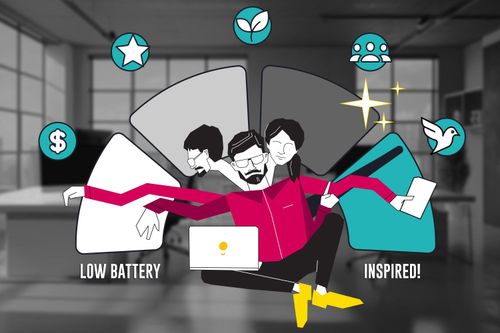
That is a burnout recipe.
Outsourcing helps protect the internal team’s focus. They stay close to the product and business logic, while the external team handles the heavy lifting: data preparation, model development, AI integration, testing, deployment, and monitoring.
You Need Production AI, Not Just a Demo
A demo is easy. Production AI is not.
A chatbot that works in a controlled test is one thing. A secure, monitored, reliable AI system connected to real company data and used by real people is another.
Production-ready AI requires:
- clean data pipelines;
- secure access controls;
- model evaluation;
- monitoring;
- fallback logic;
- human review points;
- compliance awareness;
- logging rules;
- documentation;
- cost control;
- continuous improvement.
Experienced AI development partners understand this. The model is only one part of the system. The real engineering work is everything around it.
Warning Signs: When to Keep AI Development In-House
Outsourcing is not always the right answer. Some AI work should stay close to your internal team, especially when it touches your core competitive advantage.
Keep it in-house when:
- The AI system is the heart of your product.
- The model logic is your main intellectual property.
- You already have a mature AI team.
- The project requires constant product experimentation.
- The data is too sensitive to share externally.
- Leadership cannot define ownership, success metrics, or governance
- You want outsourcing to “fix” a broken product strategy.
- A strong vendor can build with you.
- You cannot decide what your business should become.
- That responsibility should stay internal.
What to Outsource vs. What to Keep Internal: The Hybrid Model
The smartest approach is almost always a hybrid AI development model. Here's how to draw the line:
| Keep Internal | Outsource |
| Business goals | Data preparation |
| Product vision | AI architecture support |
| Problem definition | Model development |
| Data governance | LLM integration |
| Security rules | MLOps setup |
| Final product decisions | AI feature development |
| Stakeholder alignment | Testing and evaluation |
| Long-term ownership | Deployment support |
| Customer/domain knowledge | Monitoring dashboards |
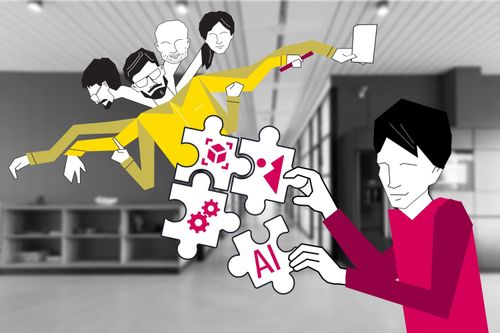
The hybrid model gives you the best of both worlds. Your internal team keeps control over strategy, data rules, product direction, and business value. The outsourced AI team brings speed, technical depth, and delivery capacity.
That is usually the most practical way to adopt AI without losing ownership.
AI Outsourcing Readiness Checklist
Before you talk to an AI development company, ask yourself these questions:
- Do we have a clearly defined business problem?
- Do we know which workflow, team, or customer experience we want to improve?
- Do we have access to the data needed for this project?
- Is the data structured, reliable, and legally usable?
- Do we have an internal owner who can make decisions?
- Do we know what success looks like?
- Can we measure the impact?
- Do we understand the security and compliance requirements?
- Do we need a PoC, MVP, or production-ready system?
- What should remain internal after the project is delivered?
If you cannot answer most of these questions, do not rush into development. Start with AI readiness, discovery, or a small proof of concept. It is better to spend two weeks clarifying the project than three months building the wrong thing.
How to Choose the Right AI Outsourcing Partner
Don't choose a partner by scanning a portfolio page. At Smartexe, we believe the right AI outsourcing company should be able to answer all of these before you sign anything:
- What AI systems have you delivered beyond demos?
- How do you evaluate model quality?
- How do you handle sensitive data?
- Who owns the code, prompts, models, and documentation?
- How do you prevent vendor lock-in?
- What happens if the model gives a wrong answer?
- How do you monitor performance after launch?
- Can you work with our internal team, not around it?
- Do you have experience in our industry?
- Can you start with a small PoC before a full build?
A good partner will not promise that AI solves everything. They will ask hard questions. They will challenge vague goals. They will talk about data, risks, cost, and maintenance.
That is what you want.
Sum up
Outsource the heavy lifting. Keep the strategic decisions internal.
That is the safest and smartest way to approach AI outsourcing.
Your company should own the problem, the product vision, the data rules, the business logic, and the final decisions.
And that is the real value of AI outsourcing. Not cheaper work.
Smarter execution. That's how you move faster without losing control.
And if you're not sure where to start — Smartexe offers a AI readiness workshop to help you map exactly what to build, what to outsource, and what to keep close.